
Table of Contents
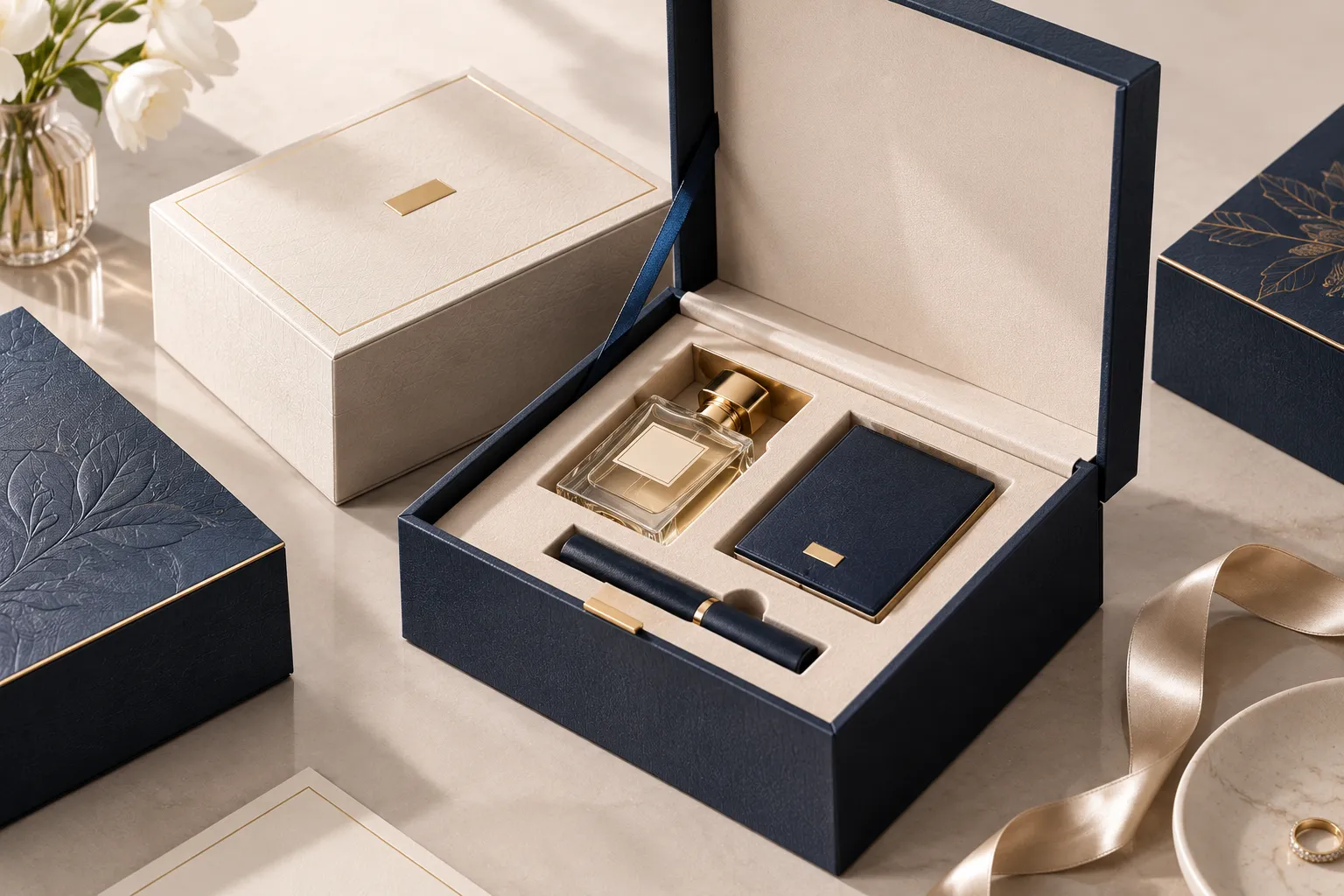
Luxury Rigid Boxes: Custom Packaging for Premium Brands
10. 9 月, 2026Written by Esion Packaging Engineering Team
Packaging engineers with hands-on experience in custom rigid box development, material selection, sampling, and mass production.
I’m a packaging engineer with 15 years of experience in rigid box manufacturing, working with brands on structure, materials, inserts, sampling, and production. One thing I’ve learned is that a premium box is not created by simply adding more decoration. The structure, material, finish, and interior need to work together.
Many brands start with the appearance they want, but later discover that the structure is difficult to produce, the insert does not fit properly, or the final cost is higher than expected.
This guide explains how we approach custom luxury packaging, from choosing the right box structure and materials to preparing a quote, approving a sample, and moving into production.
What Makes Luxury Rigid Boxes Look Premium?
A premium appearance comes from balance rather than excessive decoration. The box should feel right when customers see it, touch it, and open it.
Structure Creates the First Impression
The opening experience depends heavily on the box structure.
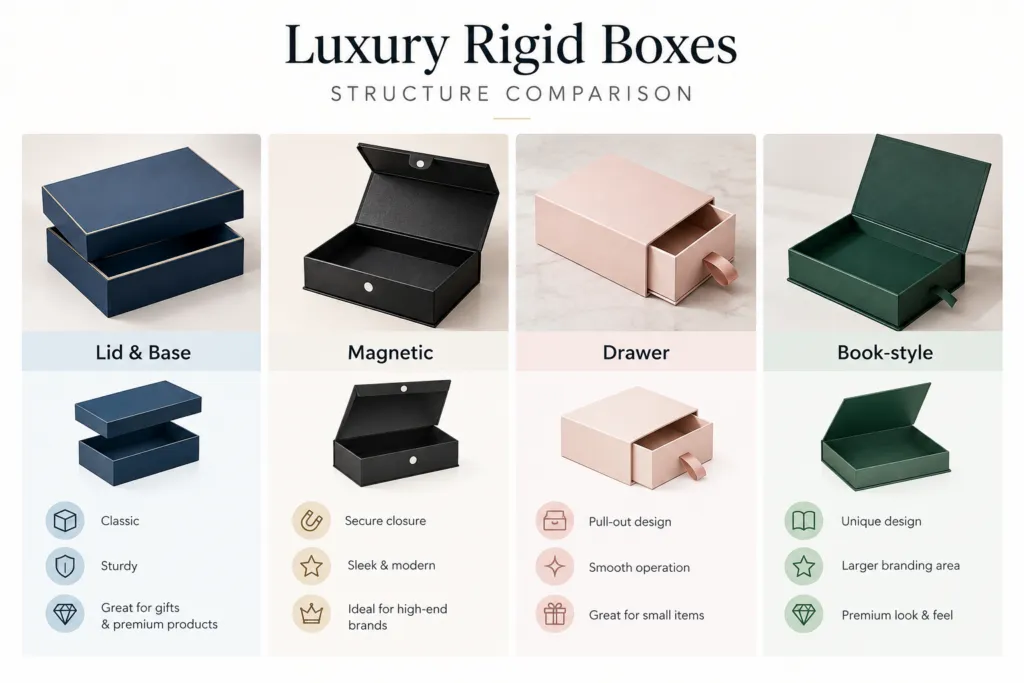
A lid-and-base box gives a classic presentation, while a magnetic closure creates a more controlled opening experience. Drawer and book-style structures can make the unboxing process more distinctive.
The best choice depends on the product and the experience you want to create.
Materials Set the Tone
The outer paper has a direct effect on how the box looks and feels.
Smooth coated paper works well with detailed graphics, while textured or specialty paper can create a stronger tactile impression. Material selection should also consider the printing and finishing processes used later.
Finishing Should Highlight the Brand
Foil stamping, embossing, debossing, spot UV, and matte or soft-touch finishes can all add value.
However, more finishing does not necessarily mean better packaging. A carefully positioned foil logo may have more impact than covering the entire box with decorative effects.
Which Structure Should You Choose?
The structure should be selected according to product size, opening experience, protection, and brand positioning.
Lid and Base
This is a simple and versatile structure for products that need a solid presentation.
It is particularly suitable when the brand wants a clean appearance without a complicated opening mechanism.
Magnetic Closure
Magnetic structures are useful when the opening action is an important part of the customer experience.
For brands considering this option, our Magnetic Rigid Boxes page provides more information about magnetic structures and customization.
Drawer and Book-Style
Drawer structures create a gradual reveal as the product is pulled from the box. Book-style boxes provide a larger opening surface and can work well when interior presentation is important.
How Should You Choose Materials and Finishes?
The right combination depends on the brand identity and the visual effect you want customers to notice first.
Paper and Printing
Common options include coated paper, textured paper, and specialty paper.
For detailed artwork and brand graphics, offset printing is commonly used for larger production runs. Digital printing can provide greater flexibility for shorter runs and changing artwork.
The final color should always be evaluated on the actual selected material rather than relying only on a screen display.
Premium Finishing
Popular finishing options include:
- Foil stamping
- Embossing and debossing
- Spot UV
- Matte lamination
- Soft-touch finishes
- Textured surfaces
Choose finishes according to the design hierarchy. The logo, product name, or key visual element should receive attention first.
How Should the Interior Be Designed?
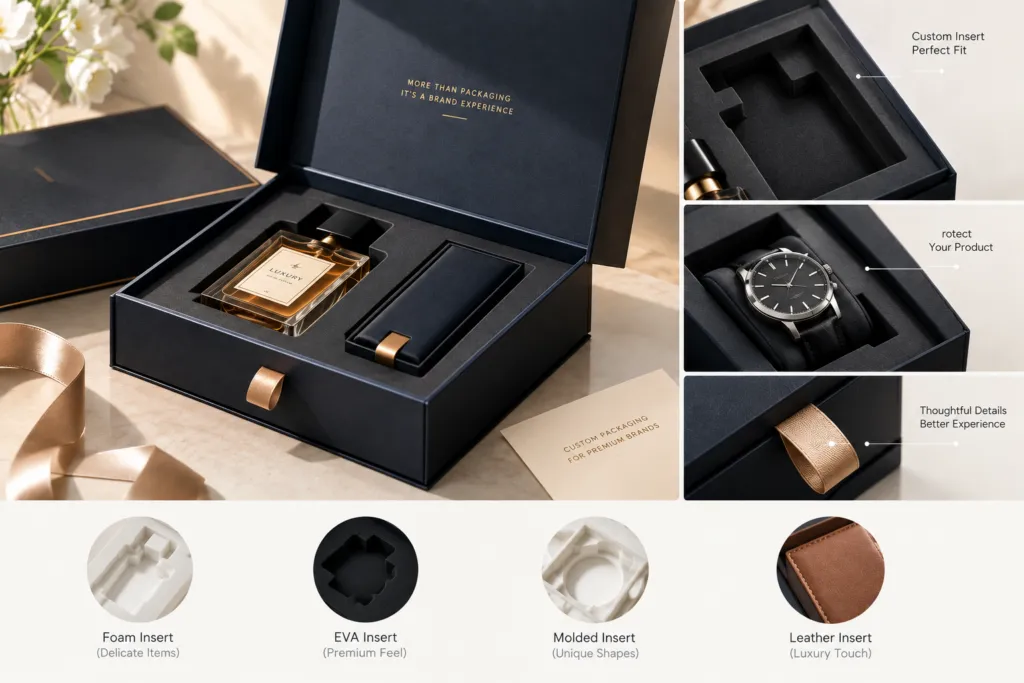
The interior should protect the product while making it easy to present and remove.
Choose the Insert Around the Product
Paperboard, EVA foam, molded pulp, and fabric-covered inserts can all be used depending on the product.
The important point is to design the insert from the actual product dimensions. Estimating the size can result in movement, excessive pressure, or an untidy presentation.
Keep the Interior Consistent
The insert does not need to look identical to the outer box, but the two should feel like one packaging system.
Color, material, positioning, and finish should support the same brand identity.
How Can Custom Rigid Packaging Fit Different Products?
Customization should start with the product rather than the box.
Luxury Gifts
Gift packaging usually benefits from a strong opening experience and a box that can be reused after purchase.
Cosmetics
Cosmetic products often require precise inserts for bottles, jars, tubes, or multiple-product sets. Product positioning and protection should be considered together.
Jewelry
Jewelry requires accurate positioning because small products can easily move inside an oversized box. The insert therefore plays an important role in both protection and presentation.
Electronics
For electronics, structural strength and precise fitting are particularly important. Accessories should also have defined positions rather than moving freely inside the package.
What Information Is Needed for a Custom Quote?
A clear specification helps the manufacturer recommend the right structure and provide a more accurate quotation.
Product Information
Prepare:
- Product dimensions
- Product weight
- Number of products per box
- Product photos or samples
- Insert requirements
Box and Branding Information
Also provide:
- Preferred box structure
- Artwork
- Brand colors
- Material preference
- Finishing requirements
- Order quantity
The delivery destination and target schedule should also be confirmed before production planning.
How Can You Control the Cost?
The most effective cost control happens during design, not after production begins.
Complex structures, specialty materials, multiple finishing processes, custom inserts, and small quantities can all increase the total cost.
Instead of removing quality-critical elements, consider simplifying unnecessary decoration or optimizing the box dimensions.
Order quantity also affects unit cost because setup and production costs are distributed differently across different quantities.
What Should You Expect From a Manufacturer?
A good manufacturer should help you solve production problems before they become costly revisions.
The process should cover structure, material selection, sampling, production, and quality control rather than treating each step separately.
For international buyers, communication is equally important. Clear specifications and an approved sample help reduce misunderstandings between design and mass production.
Esion Package can support this process by coordinating structural customization, material selection, sampling, and production within one project. This is particularly useful when buyers want to reduce repeated communication and maintain consistent specifications across production.
How Does a Custom Rigid Box Project Start?
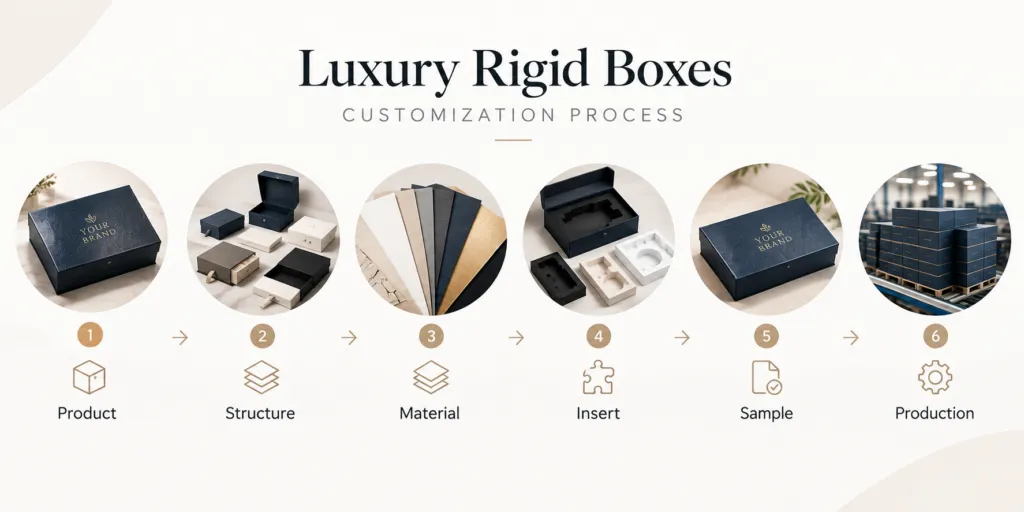
The process is straightforward when the decisions are made in the right order.
1. Confirm the product dimensions
Start with the actual product and accessories.
2. Select the structure
Choose the opening method and overall box construction.
3. Confirm materials and finishes
Match the paper and finishing to the brand identity.
4. Design the insert
Make sure the product is secure and correctly positioned.
5. Approve the sample
Check dimensions, materials, colors, finishes, and fit before production.
6. Start mass production
Once the specifications are approved, production can proceed according to the confirmed quantity and schedule.
Start Your Luxury Rigid Boxes Project
A successful Luxury Rigid Boxes project starts with the right specifications, not with decoration.
Define the product dimensions first, then choose the structure, materials, finishes, and insert around the actual product. This approach makes the packaging easier to evaluate, quote, sample, and produce.
If you are preparing a new project, contact us for a custom quote based on your product dimensions and packaging requirements.
FAQ
What is the difference between a rigid box and a folding carton?
A rigid box is made from thicker paperboard and maintains its shape, while a folding carton is made from thinner board and is designed to fold flat. Rigid boxes are commonly used when presentation, durability, and a premium unboxing experience are important.
Can I order custom rigid boxes with a specific insert?
Yes. Inserts can be developed around the product’s dimensions and protection requirements. Common options include EVA, molded paper, and foam inserts. For products with irregular shapes, the insert is normally developed together with the box structure.
What is the MOQ for custom rigid boxes?
For custom rigid box projects, our standard minimum order quantity starts at 1,000 pieces. The final production requirements may vary depending on the box structure, materials, finishing, and customization.
Can I approve a sample before mass production?
Yes. A pre-production sample allows you to check the box dimensions, structure, materials, printing, finishing, and insert fit before mass production. Once the sample is approved, the confirmed specifications can be used for production.
How long does mass production take?
For a typical custom rigid box order, mass production takes around 15 days after the final specifications and sample are approved. The actual schedule may vary depending on order quantity, materials, finishing, and production requirements.