
Table of Contents
Folding Box Suppliers: How to Choose the Right Partner for Custom Packaging
9. 9 月, 2026Last Updated: September 2026
Hi, I’m a packaging engineer at Esion Package, and I have worked with custom packaging projects for more than 15 years. One of the most common problems I see is that buyers spend too much time comparing prices before they have determined whether a supplier can actually produce the packaging they need.
A folding box may look simple in a product photo, but the final result depends on many details: structural design, material selection, printing, surface finishing, assembly, quality control, and shipping requirements. A low quotation does not necessarily mean a lower total cost, just as a high quotation does not automatically guarantee better quality.
This guide is designed to help buyers evaluate folding box suppliers more effectively. By the end, you should understand what to look for in a manufacturer, what information to prepare before requesting a quotation, and how to reduce common risks before placing a bulk order.
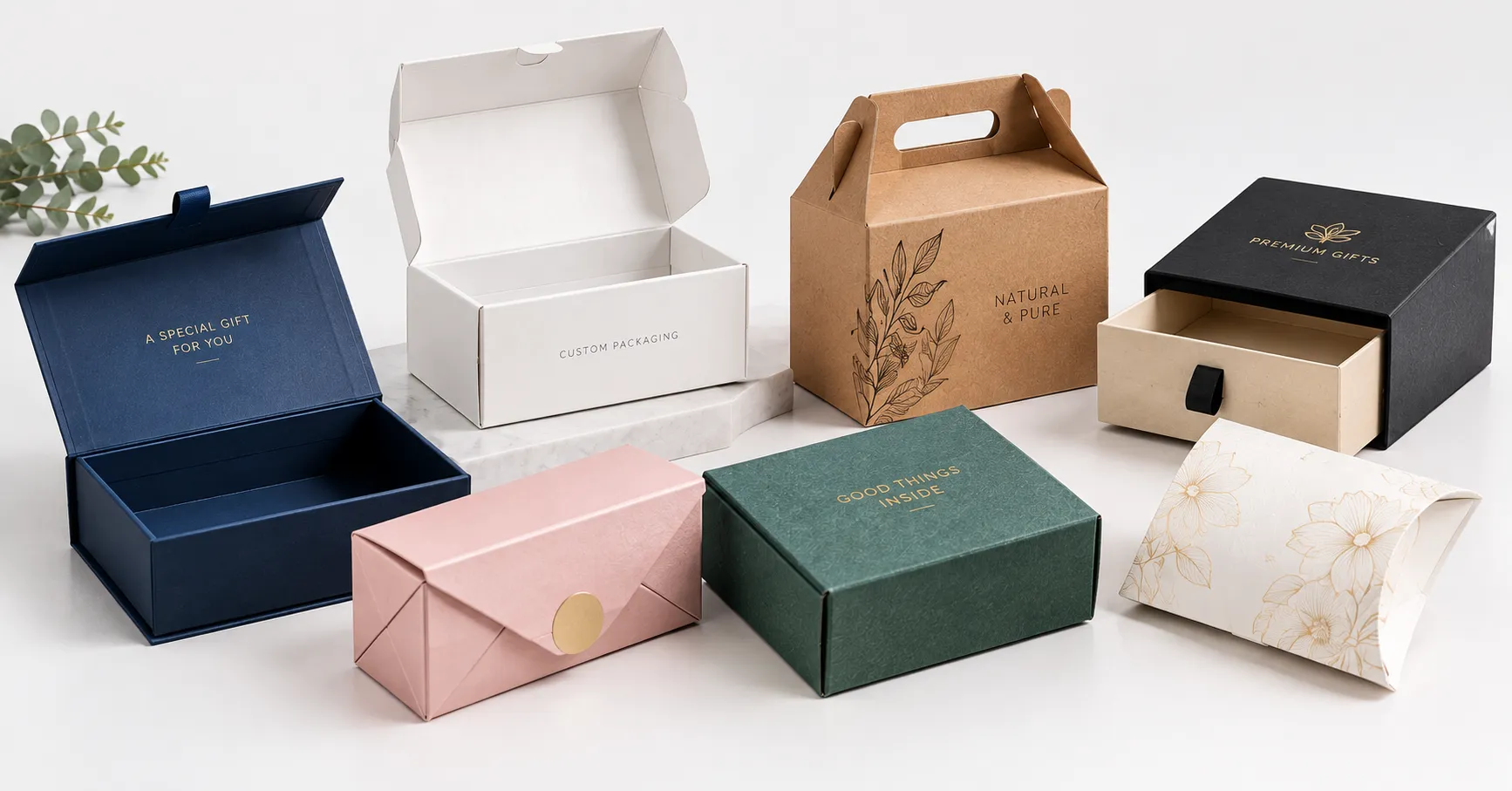
If you are still deciding on your packaging structure, you can also explore custom folding gift boxes as a starting point for comparing different folding packaging options.
What Does a Folding Box Supplier Actually Provide?
The best folding box supplier is not simply a company that prints and ships boxes. For a custom packaging project, the supplier may need to provide technical support from the earliest design stage through final production.
This is particularly important when the packaging must fit a specific product, support a premium brand image, or remain stable during international shipping.
Standard Folding Boxes vs. Custom Folding Gift Boxes
Some suppliers focus primarily on standard packaging with fixed sizes and limited customization. This can work well for simple products or businesses that need packaging quickly.
Custom projects are different. A custom folding box manufacturer may need to adjust the dimensions, opening structure, board thickness, printing method, and finishing process according to the customer’s product and brand requirements.
For example, a folding gift box designed for lightweight clothing may not require the same structural strength as a box used for cosmetics, electronics, or a multi-product gift set. The supplier should understand these differences before recommending a solution.
What Services Should a Full-Service Supplier Offer?
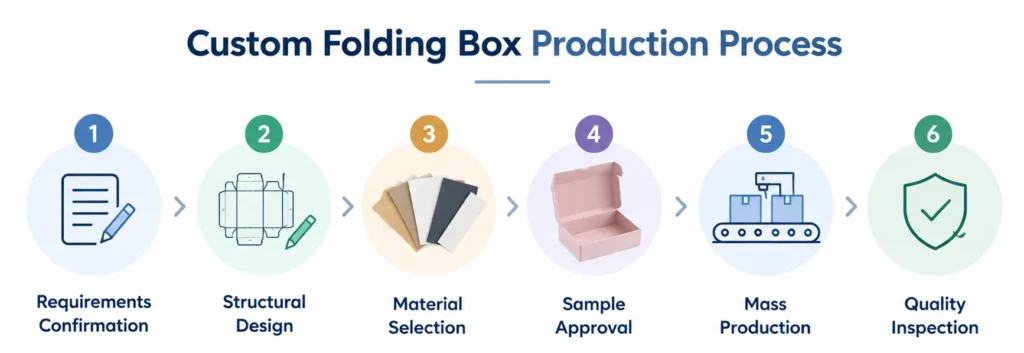
For more complex projects, it is useful to work with a supplier that can support multiple stages of the process. This may include structural design, material recommendations, printing preparation, sample development, mass production, and quality inspection.
A supplier does not necessarily need to perform every service internally. What matters is whether they can take responsibility for the final packaging result and communicate clearly about each production stage.
A good purchasing conversation should therefore go beyond, “How much does this box cost?” It should begin with, “What does the box need to do?”
How Can You Tell Whether a Folding Box Supplier Is Reliable?
A reliable folding box supplier should be evaluated based on project experience, production control, sample quality, and communication rather than price alone.
Review Relevant Packaging Experience
Look for suppliers with experience handling projects similar to yours. Experience with similar box structures, materials, printing, or finishing requirements can reduce problems during sampling and production.
Understand Whether You Are Working With a Manufacturer or Trading Company
A manufacturer is directly involved in production and may have greater control over materials, production schedules, and quality inspection. A trading company may offer broader sourcing options but can add another communication layer between the buyer and the factory.
The important question is who is responsible for your project and how production requirements are communicated.
Ask About Quality Control
Before placing a larger order, ask how the supplier checks important details such as box dimensions, printing accuracy, structural assembly, and visible finishing defects.
Review Samples Before Mass Production
Samples allow buyers to evaluate the actual structure, material, printing, and finishing before production begins. The approved sample should also be used as a reference for mass production.
Evaluate Communication During the Quotation Stage
A reliable supplier should clarify missing information before providing a final quotation. If a buyer provides only a reference image, details such as box dimensions, materials, structure, and finishing should be confirmed before production requirements are finalized.
What Materials Should You Consider When Ordering Folding Boxes?
Material selection affects more than the appearance of a box. It influences structural strength, printing results, durability, production cost, and how customers perceive the final product.
Paperboard and Cardboard Options
Different packaging projects may use different combinations of paperboard and covering materials.
Common considerations include:
- Required structural strength
- Product weight
- Printing requirements
- Surface appearance
- Sustainability goals
- Overall packaging budget
A material that works well for one product may be unnecessary or unsuitable for another. Buyers should therefore avoid choosing a board simply because it is the cheapest or thickest option available.
How Does Material Thickness Affect Box Quality?
Thicker materials can improve rigidity, but more thickness does not always mean a better box.
The correct specification depends on how the box will be used. A lightweight product may not require heavy board, while a premium gift set may need additional structural support.
Thickness also affects folding, die-cutting, assembly, shipping weight, and overall cost. The supplier should consider these factors together.
How Do Surface Finishes Change the Final Look?
Finishing is often where a standard box becomes a more distinctive brand package.
Common options include matte lamination, gloss lamination, soft-touch finishes, foil stamping, spot UV, and embossing.
However, finishes should support the packaging design rather than compensate for a weak design concept. A complicated combination of processes can increase costs without necessarily improving the customer experience.
What Should You Ask Folding Box Suppliers Before Requesting a Quote?
A more complete project brief usually leads to a more accurate quotation. When critical information is missing, suppliers may have to make assumptions, which can create unexpected price changes later.
Product Dimensions
Provide the required length, width, and height whenever possible.
If the box needs to fit a product precisely, the supplier may also need the product dimensions or information about additional inserts.
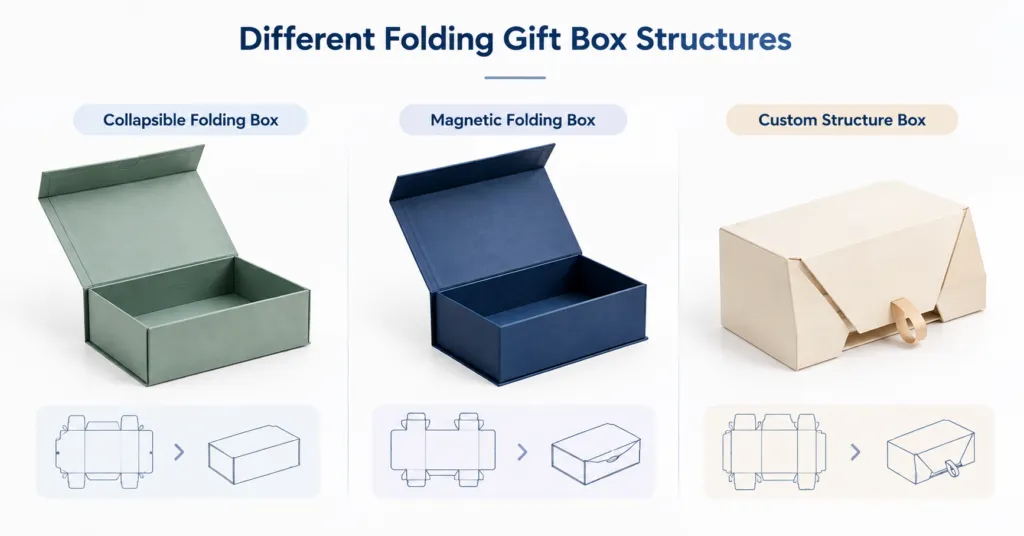
Box Structure
Explain how the box should open, close, fold, and hold the product.
If you have reference images or a previous packaging sample, these can help communicate your requirements more accurately.
Printing Requirements
The supplier may need information about your logo, artwork, colors, and printing expectations.
For more complex brand projects, production-ready artwork can reduce communication time and prevent avoidable errors.
Material and Finishing Requirements
If you already have a preferred material or finish, include this information in the inquiry.
If you do not know what to choose, explain the intended use and desired appearance. A capable supplier should be able to recommend suitable options.
Order Quantity and Delivery Destination
Quantity directly affects material purchasing, production setup, and unit pricing. The delivery destination can also affect packaging and shipping recommendations.
Providing this information early makes it easier for folding box suppliers to give you a quotation that reflects the actual project.
How Does Order Quantity Affect Folding Box Pricing?
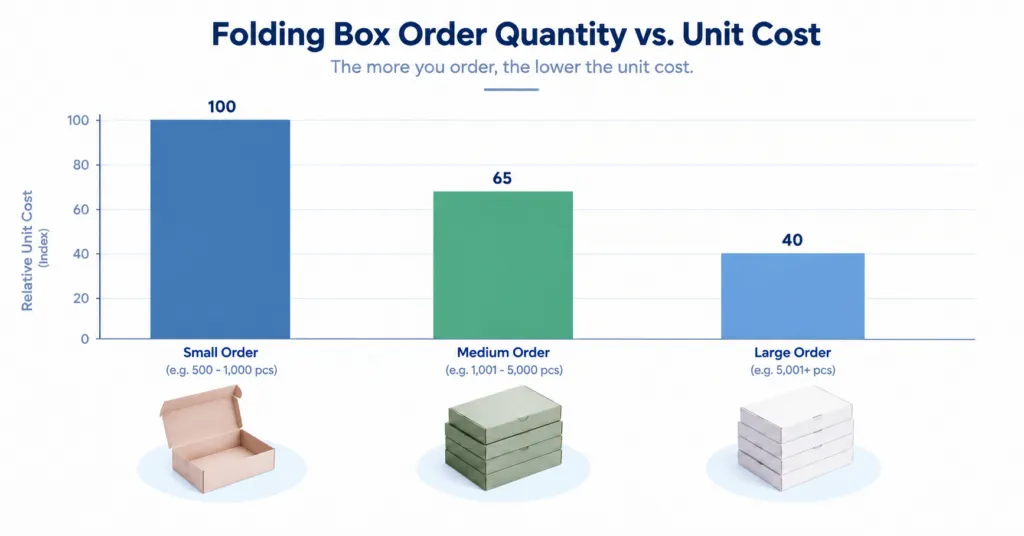
Order quantity has a major impact on unit cost, but it is not the only pricing factor. Box size, materials, printing, finishing, and structural complexity can also significantly change the final quotation.
Small Quantity Orders
Small orders usually have a higher unit cost because certain setup and production costs are distributed across fewer boxes.
These orders may be suitable for product testing, new brand launches, or limited campaigns.
Medium Quantity Orders
Medium-volume production often provides a balance between flexibility and unit cost.
This can be a practical option for growing brands that want custom packaging without committing immediately to very large inventory volumes.
Large Volume Orders
Larger orders can often reduce the unit cost because materials and production resources can be used more efficiently.
However, the lowest unit price is not always the best purchasing decision. Buyers should also consider storage requirements, product demand, and the risk of packaging becoming outdated.
What Other Factors Affect Custom Box Pricing?
Two boxes with the same dimensions may have significantly different costs because of differences in:
- Material specifications
- Printing colors
- Surface finishes
- Structural complexity
- Inserts
- Manual assembly requirements
For a more detailed analysis, a supporting article using the anchor text folding box pricing can help buyers understand which design decisions have the greatest effect on their budget.
Should You Work With a Local Supplier or a China Folding Box Manufacturer?
There is no single answer for every buyer. The right sourcing location depends on order volume, customization requirements, logistics planning, communication preferences, and total purchasing cost.
Advantages of Local Suppliers
Local suppliers may offer easier communication and potentially faster access to physical meetings or samples.
For urgent or highly localized projects, these advantages can be valuable.
Advantages of China Folding Box Manufacturers
Many China foldable gift box manufacturers have extensive experience with export packaging and large-scale customization.
Depending on the project, buyers may benefit from broader manufacturing capabilities, flexible finishing options, and competitive production costs.
However, international sourcing also requires proper planning. Production lead times and shipping schedules should be considered before the final purchasing decision.
What Should International Buyers Consider?
International buyers should evaluate the complete supply process rather than focusing only on the factory price.
Important factors include:
- Sample approval time
- Production lead time
- Quality communication
- Export packaging
- Shipping arrangements
- Total landed cost
A supplier who communicates clearly during the early stages can often help reduce misunderstandings later in the project.
How Long Does Custom Folding Box Production Usually Take?
Custom packaging should be planned as part of the product development process rather than treated as a last-minute purchase. Production time depends on the complexity of the project and the supplier’s current capacity.
Artwork and Structural Design Stage
Before production begins, the dimensions, structure, artwork, and technical details need to be confirmed.
Changes at this stage are generally easier to manage than changes after mass production has started.
Sample Production Stage
Samples may be needed to verify:
- Structure
- Size
- Material
- Printing
- Overall appearance
More complex custom packaging may require additional revisions before final approval.
Mass Production Stage
Production time can vary according to order quantity and the processes involved.
For example, a box requiring specialized finishing or manual assembly may require more production coordination than a simpler structure.
Shipping and Delivery Planning
The production schedule is only part of the total timeline. Buyers should also plan for transportation and final delivery.
What Common Mistakes Should You Avoid When Choosing a Folding Box Supplier?
Many packaging problems can be prevented before an order is placed. The following mistakes are common because buyers sometimes focus on a single factor instead of evaluating the entire project.
Choosing Only Based on the Lowest Price
A low quotation may result from differences in material specifications, finishing, quality standards, or production processes.
Always make sure you are comparing similar specifications before comparing prices.
Not Checking Physical Samples
Product photos and digital mockups are useful, but they cannot replace a physical review when packaging quality is important.
Providing Incomplete Packaging Specifications
Unclear dimensions, materials, or finishing requirements can lead to inaccurate quotations and unnecessary revisions.
Ignoring Shipping and Storage Requirements
Packaging needs to work not only when displayed to customers but also when stored and transported.
A beautiful box that is easily damaged during shipping can create a larger cost problem than a slightly more expensive but better-engineered alternative.
Failing to Confirm Quality Standards Before Production
Both the buyer and supplier should have a clear understanding of the approved specifications before mass production begins.
How Can an Experienced Packaging Manufacturer Help Simplify the Process?
The right manufacturer can contribute more than production capacity. For custom projects, experienced packaging support can help identify problems before they become expensive production mistakes.
A supplier may help review whether a box structure is practical, whether a selected material matches the product, and whether a particular finishing effect can be consistently reproduced at scale.
Getting Help With Structural Design
A structure that looks attractive must also be practical to manufacture, assemble, ship, and use.
Early technical feedback can prevent unnecessary design revisions later.
Avoiding Material and Production Mistakes
Material selection is often easier when the supplier understands the product’s weight, intended market, shipping method, and brand positioning.
The objective should be to select the most suitable solution rather than simply the most expensive option.
Managing Samples and Mass Production
Clear specifications and a structured approval process can improve communication between buyers and production teams.
For example, Esion Package works with custom packaging projects by helping customers clarify structural requirements, select appropriate materials and finishes, and reduce communication gaps between packaging design and production. This can be particularly useful for overseas buyers managing custom orders remotely.
What Is the Best Way to Start Working With a Folding Box Supplier?
The most effective way to begin is to provide enough information for the supplier to understand the actual packaging requirement. Starting with a clear brief usually produces better technical recommendations and more meaningful quotations.
Prepare Your Packaging Specifications
Include the basic dimensions, intended product, quantity, and required packaging structure.
Share Your Artwork or Brand Requirements
If artwork is not finalized, reference designs or basic brand guidelines can still help define the visual direction.
Request a Sample or Prototype
For customized projects, a sample can provide valuable confirmation before large-scale production begins.
Review Pricing and Production Details
Compare quotations based on the same specifications. If one quotation is significantly different, ask why rather than assuming the lowest price is automatically the best option.
Confirm Quality Standards Before Mass Production
The final approved specifications should clearly define what the supplier is expected to produce.
If you are currently comparing several folding box suppliers, preparing a complete project brief before requesting quotations will usually save time on both sides and make the comparison process much more reliable.
Once you have your box dimensions, product details, artwork, and estimated order quantity ready, you can contact Esion Package to discuss your custom packaging project. Sharing these details at the beginning will help our team better understand your requirements and provide more relevant packaging recommendations.
FAQ
How do I find reliable folding box suppliers?
Start by checking whether the supplier has relevant manufacturing experience, appropriate production capabilities, clear communication processes, and a structured quality control system. Reviewing samples is also important before placing a large custom order.
What is the difference between a folding box supplier and a manufacturer?
A manufacturer is generally directly involved in producing the packaging, while a supplier may include manufacturers, trading companies, or sourcing companies. For highly customized projects, understanding who controls production can help you evaluate technical capability and quality management.
What information do I need to get a quote for custom folding boxes?
Provide the box dimensions, structure, materials or desired appearance, printing requirements, finishing options, order quantity, and delivery destination. The more complete your project information is, the more accurate the quotation is likely to be.
What is the MOQ for custom folding gift boxes?
MOQ depends on the box structure, material requirements, printing process, and production setup. There is no single MOQ that applies to every custom packaging project, so it is best to discuss the specific design with the supplier.
How long does it take to manufacture custom folding boxes?
The total timeline depends on design confirmation, sample approval, production complexity, order quantity, and shipping arrangements. Buyers should plan packaging procurement early rather than waiting until the final stage of product preparation.
Final Thoughts
Choosing the right folding box supplier is not simply about finding the lowest quotation. The supplier’s manufacturing capability, communication efficiency, material knowledge, sample process, and quality consistency can all affect the success of your packaging project.
For B2B buyers sourcing custom folding gift boxes, the most practical approach is to first define the packaging requirements, then compare suppliers based on their ability to meet those requirements consistently.
Once you have confirmed the structure, materials, quantity, and branding requirements, you will be in a much stronger position to evaluate quotations and select the right manufacturing partner.