Table of Contents
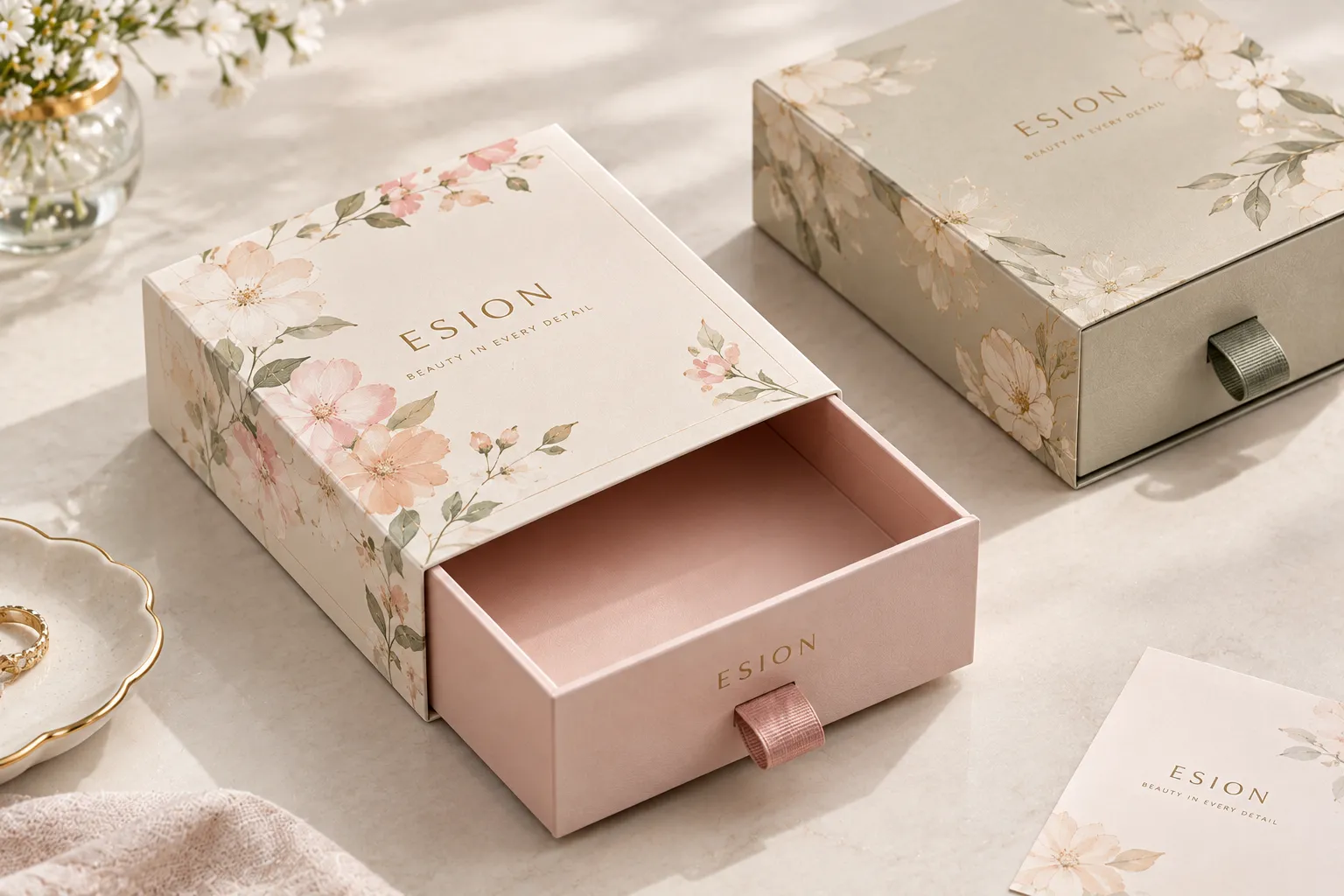
Drawer Box Customization: Materials, Printing & Finishes
24. 9 月, 2026By Esion Package Editorial Team
Technical review: Esion Packaging QC Team
Last updated: September 24, 2026
A drawer box can look simple in a product photo, but the finished result depends on much more than the artwork. Board, wrapping paper, printing, surface finishes, edge wrapping and the relationship between the sleeve and drawer all affect how the package looks and feels after production.
At Esion Package, we approach drawer box customization from the finished package backward: first define the product presentation, then select materials, printing and finishes that work with the structure. If you are already considering a custom drawer box, this guide explains the main decisions to make before sampling.
If you are still deciding how the drawer structure itself works, start with our drawer box packaging guide. This article focuses specifically on customization rather than repeating the structural explanation.
Before choosing materials or finishes, it is worth understanding how the sleeve and drawer work together. See our drawer box packaging guide for a closer look at the structure, sliding fit and sample checks.
What Can Be Customized on a Drawer Box?
Most drawer box customization decisions fall into four areas: materials, printing, surface finishes and interior presentation. The best results come from treating these as one specification rather than choosing each option separately.
Can the Box Size Be Customized?
Yes. The sleeve and drawer can be developed around the dimensions of the product and the desired presentation.
However, the visible size is only one part of the specification. The wrapping material, interior construction and finishing also need to be considered before the final sample is approved.
For the structural side—including how the sleeve and drawer interact—see the drawer box packaging guide.
Can the Sleeve and Drawer Have Different Designs?
Yes.
The two components do not have to use identical artwork. A brand may use a simple exterior sleeve and a more detailed drawer interior, or use contrasting colors to make the opening experience more distinctive.
For example, a black outer sleeve with a contrasting interior can create a stronger reveal when the drawer is pulled open.
Which Materials Are Suitable for Drawer Box Customization?
Material selection determines the basic rigidity, surface appearance and compatibility with printing and finishing.
What Board Is Commonly Used?
Rigid drawer boxes commonly use greyboard as the structural board, with decorative or printed paper wrapped around the board.
The board provides the basic structure, while the outer paper determines much of the visible appearance.
The appropriate specification depends on the finished box size and required construction. It is therefore better to select the board together with the complete box design rather than choosing it independently.
What Wrapping Paper Options Are Available?
Depending on the intended appearance, a drawer box can use different types of wrapping paper, including:
- coated printed paper;
- uncoated paper;
- textured paper;
- colored paper; and
- specialty papers suitable for the project.
A smooth coated paper can emphasize printed graphics, while textured paper puts more emphasis on material feel.
The paper should also be evaluated after wrapping because the finished surface—not the flat paper sheet—is what the customer ultimately sees.
Does Paper Choice Affect the Drawer?
Yes, particularly when the sleeve and drawer use interacting surfaces.
A change in paper can alter the finished appearance and construction of the wrapped component. This is why we consider the actual wrapped sleeve and drawer during sampling rather than treating the paper specification as an isolated decoration choice.
Which Printing Options Work Best for Drawer Boxes?
Printing should be selected according to the artwork, paper, color requirements and production quantity.
Is Offset Printing Suitable for Detailed Artwork?
Offset printing is a practical option for artwork containing detailed graphics, large printed areas or controlled brand colors.
It is especially useful when the design relies on consistent reproduction across the production run.
For brand-sensitive projects, the final printed sample should be used to confirm the actual appearance instead of relying only on a digital screen preview.
Can Pantone or Brand Colors Be Matched?
Yes, when a specific brand color is important, the artwork specification should identify the required color system clearly.
For projects where color consistency matters, the approved physical sample should become the visual reference for production.
This is particularly important when the sleeve and drawer use different papers, because the same artwork color can appear different on different surfaces.
Can the Inside of the Drawer Be Printed?
Yes.
Interior printing can turn the opening movement into part of the brand presentation.
For example:
Exterior: restrained logo and brand color
Interior: pattern, message or secondary brand color
This approach can create a more deliberate unboxing experience without adding another structural component.
What Do the Common Drawer Box Finishes Do?
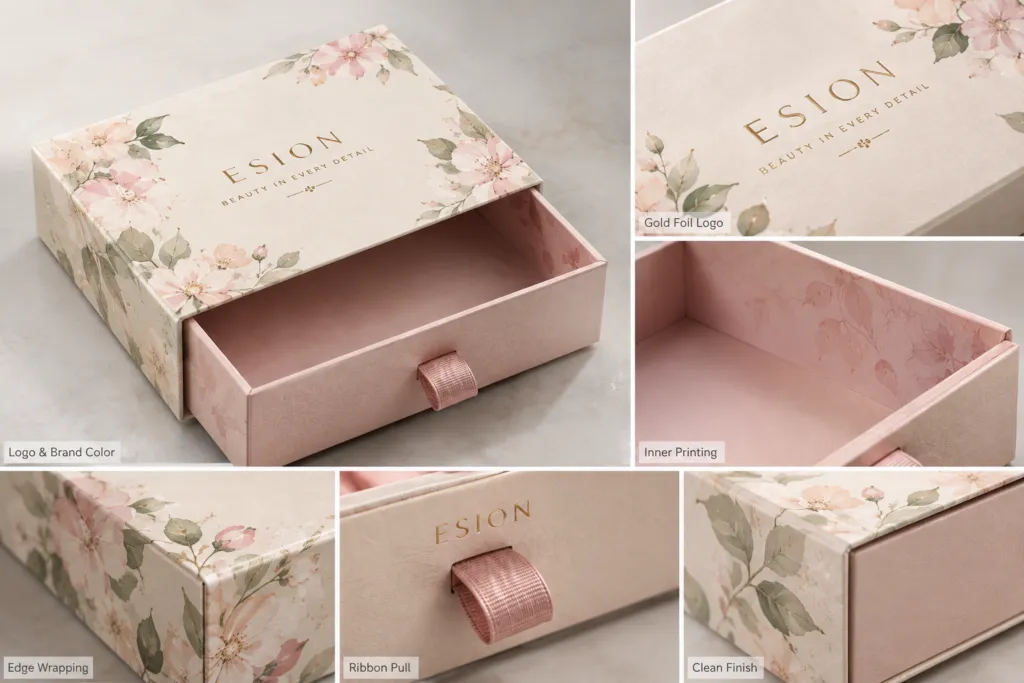
Different finishes create different visual and tactile effects. The important question is not which finish is most impressive, but which one supports the intended brand presentation.
| Finish | Visual effect | Suitable when |
|---|---|---|
| Matte lamination | Soft, low-reflection surface | A restrained premium appearance is preferred |
| Gloss lamination | Brighter, reflective surface | Stronger visual contrast is wanted |
| Spot UV | Selective gloss detail | A logo or pattern needs emphasis |
| Foiling | Metallic or special-color highlight | A key brand element needs stronger contrast |
| Embossing | Raised tactile detail | The logo or pattern should be physically noticeable |
| Debossing | Recessed tactile detail | A more understated texture is preferred |
| Textured paper | Stronger material character | Paper feel is part of the design |
Esion’s packaging production capabilities include options such as matte and gloss lamination, spot UV, embossing and foiling, with the final combination confirmed according to the specific project.
Should Several Finishes Be Combined?
They can be, but combining more finishes does not automatically create a better package.
A simple combination such as textured paper + restrained logo may be more effective for a premium brand than using foil, embossing, spot UV and multiple colors at the same time.
The best approach is to establish one main visual feature and use the other finishes to support it.
What Customization Issues Are Specific to Drawer Boxes?
This is where drawer box customization requires more attention than a general printed box. The decorative treatment is applied to components that physically interact with each other.
Can Surface Finishing Affect the Sliding Area?
Potentially, yes.
The sleeve and drawer are finished components, so changes to their surface materials can affect the way the two surfaces interact. This is particularly relevant when the design uses different papers or surface treatments on the interacting areas.
Rather than assuming that the decorated version will behave exactly like an unfinished board sample, the finished components should be checked together during sampling.
What Should Be Considered Around Drawer Edges?
Artwork should account for the areas where paper is folded and wrapped around the board.
Important design elements should not be positioned without considering:
- wrapped edges;
- corners;
- seams;
- fold areas; and
- areas that become hidden when the drawer is closed.
A logo that looks correctly positioned on a flat artwork file may appear different once the paper has been wrapped around the finished component.
Can Foil or Embossing Be Placed Near an Edge?
It can, but the position should be checked against the finished construction.
A decorative element close to a fold, corner or wrapped edge has less visual tolerance than one placed on a broad flat surface. For important logos or patterns, keeping sufficient clear space around the treatment generally makes the finished result easier to control.
What If the Sleeve and Drawer Use Different Papers?
Different papers can create useful contrast between the exterior and interior.
However, they should be evaluated as a pair because their surface appearance and finished construction may differ.
For example, a textured paper on the sleeve and a smooth printed paper on the drawer can create a deliberate contrast, but the final sample should confirm that both materials work together visually and mechanically.
How Should You Choose the Right Customization Level?
The right specification depends on what the packaging needs to communicate.
What Works for a Minimal Premium Look?
A restrained combination is often enough:
quality paper + controlled color + simple logo + one distinctive finish
The package then relies on material quality, proportion and execution rather than a large number of decorative effects.
What Works for Stronger Brand Recognition?
Brand color and logo consistency should take priority.
A drawer box can use the same brand color across the sleeve and drawer, or use a controlled contrast between the outside and inside.
The important point is consistency across the finished package.
What Works for a Stronger Unboxing Experience?
The inside of the drawer deserves more attention.
A simple exterior can reveal a contrasting color, printed pattern, brand message or special finish when the drawer is opened.
This approach uses the existing drawer movement as part of the presentation instead of adding unnecessary structural complexity.
How Should Color and Finishing Be Confirmed Before Production?
Color and finishing should be confirmed on the actual material whenever they are important to the brand.
Should You Approve a Printed Sample First?
For projects where color, foil, embossing or surface appearance is important, physical sampling is useful because screen images cannot fully represent the finished paper and surface treatment.
Esion’s normal production process includes a pre-production sample for customer confirmation before mass production.
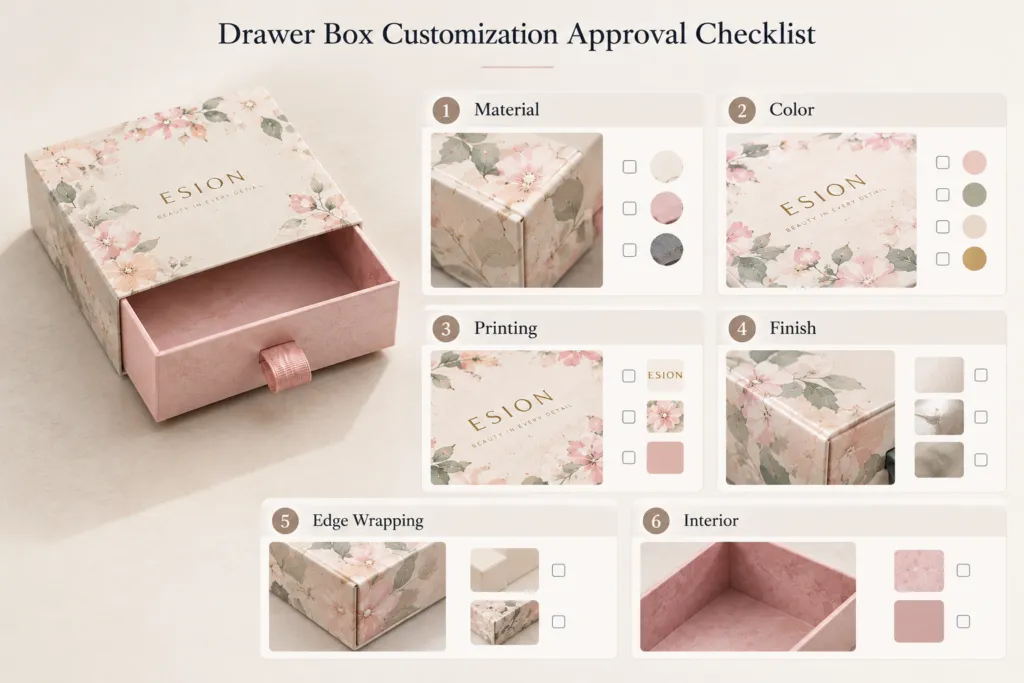
What Should You Check on the Customized Sample?
For this type of project, focus on the customization itself:
- brand color appearance;
- logo position;
- print sharpness;
- foil or embossing position;
- paper texture;
- edge wrapping;
- sleeve and drawer color relationship;
- interior printing; and
- overall visual consistency.
The approved sample then provides the practical reference for the production team.
Which Customization Choices Usually Increase Production Complexity?
Not every option has the same production impact.
In general, complexity tends to increase when a project combines specialty materials, multiple finishing processes, several printed surfaces or more complicated assembly requirements.
For example, a drawer box using one paper, one print treatment and a simple logo is easier to control than a package combining different papers, multiple finishes, detailed edge artwork and several interior components.
This does not mean that complex finishing should be avoided. It means the specification should be finalized before quotation and sampling so that the production requirements are clear.
Does the MOQ Depend on the Customization?
It can.
As of September 2026, our general MOQ is 1,000 pcs, while the final requirement can vary according to the selected material, finishing and production configuration.
For an exact quotation, the customization specification should therefore be confirmed together with the quantity.
How We Support Drawer Box Customization
Dongguan Esion Packaging Co., Ltd. provides paper packaging development and production covering printing, gluing, laminating, die cutting, handmade assembly, QC inspection and packing.
For drawer box projects, this means material selection, artwork, finishing and production requirements can be discussed within the same packaging workflow instead of being handled as separate suppliers.
Our general production information is MOQ 1,000 pcs as of September 2026, with production timing confirmed according to the project specification. Esion has also passed FSC certification; the applicable certification scope should be confirmed for the specific project.
If your structure is already decided, you can review our custom drawer box as a current product example, then discuss the required material, printing and finishing combination with our team.
For a project that is ready for quotation, contact Esion Package with the product dimensions, quantity, preferred materials, artwork requirements and finishing options. This gives our team enough information to assess the specification and prepare the next step.
FAQ
Can a drawer box use different paper for the sleeve and drawer?
Yes. Different papers can be used to create visual contrast, but their finished appearance and interaction should be checked together during sampling.
Can I use Pantone colors on a drawer box?
Pantone or other specified brand colors can be considered when color consistency is important. The approved physical sample should be used as the practical production reference.
Can I combine foil, embossing and spot UV?
Yes, but the combination should have a clear visual purpose. Using several finishes simply because they are available can make the design unnecessarily complicated.
Does the paper affect drawer box customization?
Yes. Paper affects surface appearance and can also affect the finished construction of the wrapped components. This is particularly important when the sleeve and drawer interact directly.
Can I customize the inside of a drawer box?
Yes. Interior printing, contrasting colors, patterns and selected finishes can all be used to make the drawer-opening experience part of the brand presentation.