
Table of Contents
Drawer Box Packaging: Structure, Opening & Sample Checks
24. 9 月, 2026In our packaging production, a drawer box is not judged by its drawing alone. Once the board, wrapping paper, adhesive, insert and actual product are assembled, the finished package can behave differently from the original structural plan. That is why we treat the sample as part of the development process, not simply as a final appearance check.
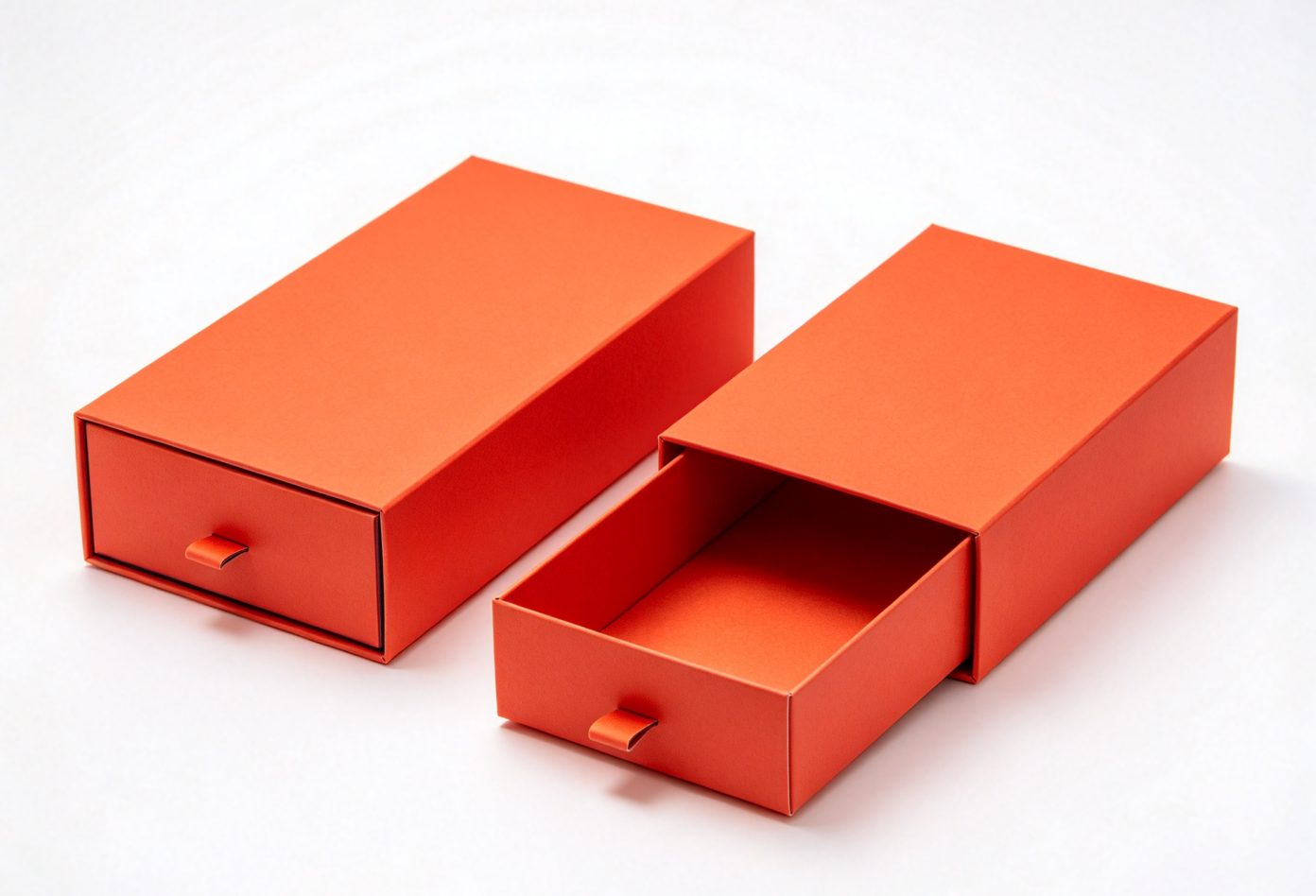
A drawer box uses an inner drawer that slides horizontally through an outer sleeve. The structure is straightforward, but the relationship between these parts determines how the box opens, how the product is positioned and how the package feels in use.
This guide explains the structure, sliding fit and key sample checks before production. If you are developing a project, you can also review our custom drawer box and prepare the product information needed for sampling.
What Is a Drawer Box in Packaging?
A drawer box is a sliding package with an outer sleeve and an inner drawer. The drawer moves horizontally through the sleeve to give access to the product, rather than opening like a separate lid or a furniture drawer.
The structure can use different paper-based constructions. Rigid versions generally use board with a wrapped paper surface, while lighter constructions may use paperboard. The appropriate material depends on the required strength, appearance and application.
Are Sleeve Box and Slide Box the Same Thing?
The terminology varies between packaging suppliers.
“Slide box” emphasizes the sliding movement, while “sleeve box” emphasizes the outer sleeve. “Matchbox-style” may also describe a similar sleeve-and-drawer arrangement.
Because these terms are not always used consistently, it is better to confirm the intended opening structure with a drawing, reference image or physical sample when requesting a quotation.
How Is a Drawer Box Structured?
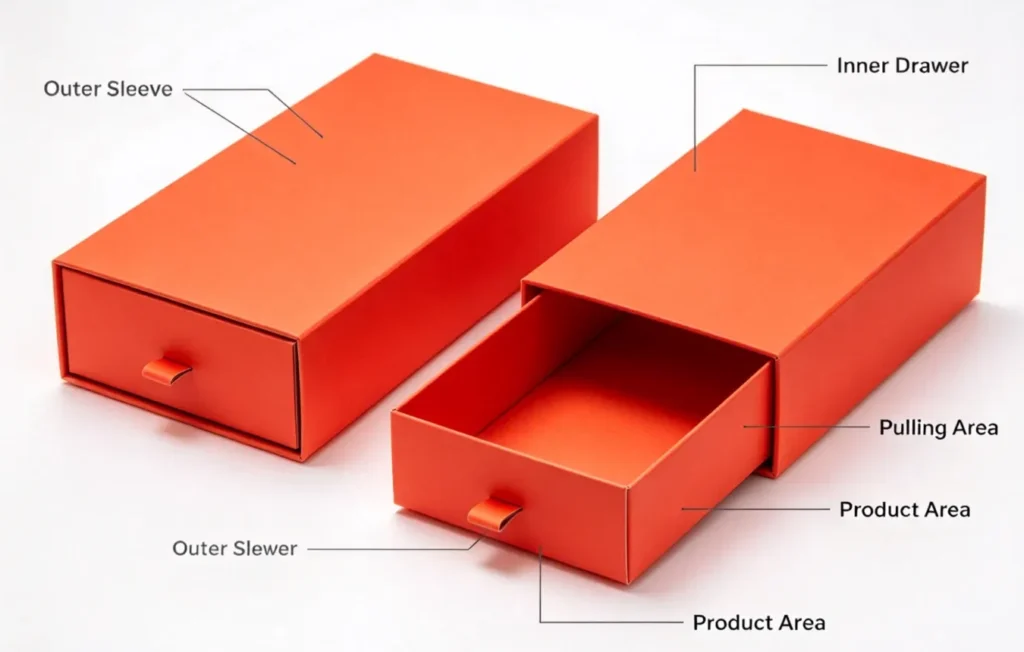
The drawer and sleeve form the basic working structure. Ribbons, pull tabs and inserts can support opening or product presentation, but they are additional design elements.
What Does the Outer Sleeve Do?
Outer sleeve: The fixed section that surrounds the drawer and guides its movement.
When the package is closed, the sleeve covers the drawer and forms much of the exterior appearance. Its finished internal space therefore needs to work with the drawer dimensions.
If the sleeve is too tight, opening resistance can increase. If it is too loose, the drawer may feel unstable during use.
What Does the Inner Drawer Do?
Inner drawer: The moving section that contains the product.
The drawer should be developed around the actual product and internal configuration.
For example, an insert may occupy space that is available when the drawer is empty. Accessories or protective materials can have the same effect. These components therefore need to be considered before the final internal dimensions are approved.
What Does the Pulling Area Do?
The pulling area gives the user a practical way to start the drawer movement.
Depending on the design, it can be:
- the front edge of the drawer;
- a ribbon;
- a pull tab; or
- another integrated opening detail.
The opening detail should be easy to use without interfering with the sleeve, product or closing position.
How Does a Drawer Box Open and Close?
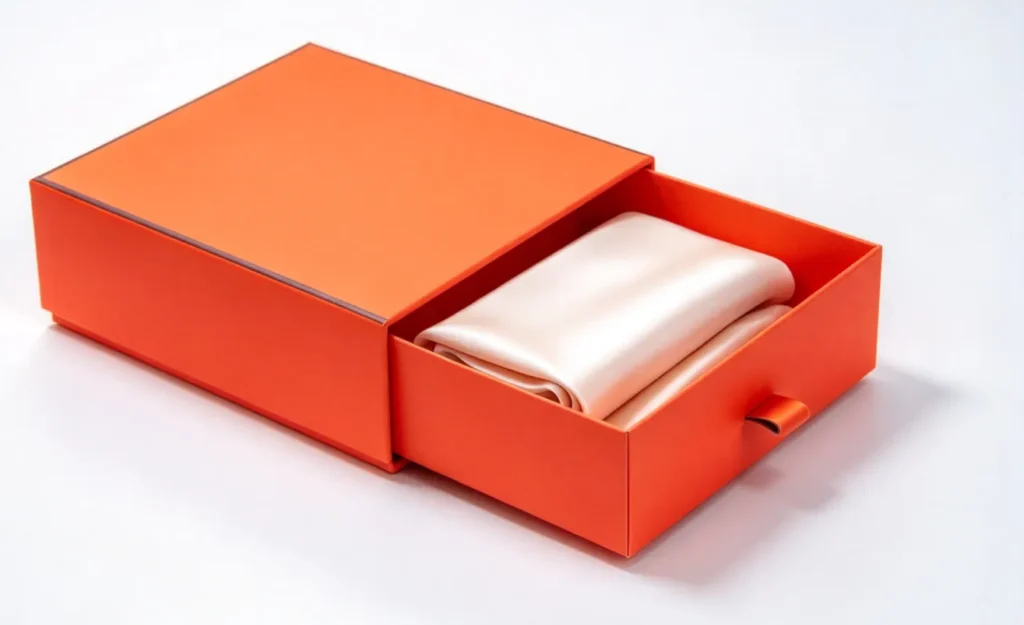
A drawer box opens through a horizontal pull-and-slide movement. The drawer remains within the sleeve while moving outward, creating a different presentation experience from a lift-off or hinged box.
What Happens During Opening?
The customer pulls the drawer outward and progressively reveals the product.
The basic movement is:
Closed box → drawer pulled outward → product revealed → product accessed
This sequence can be especially useful when the product presentation is part of the packaging experience.
A product can be positioned so that the first view is controlled by the amount of drawer movement, rather than exposing everything immediately.
What Affects the Sliding Fit?
The sliding fit is influenced by the complete construction rather than one dimension alone. Board, wrapping materials, adhesive, finished dimensions and assembly accuracy all contribute to the final result.
How Do Materials Affect the Fit?
For a wrapped rigid structure, the finished dimensions are affected by more than the core board.
The board, wrapping paper and adhesive become part of the assembled structure, while production and assembly accuracy can also affect the relationship between the drawer and sleeve.
This is why a structural drawing establishes the intended dimensions, but the finished sample is what confirms the actual fit.
How Should the Sleeve and Drawer Be Matched?
The sleeve and drawer should be developed as one system.
The design should account for:
- finished drawer dimensions;
- sleeve internal space;
- product and insert dimensions;
- material construction;
- assembly tolerance; and
- intended opening feel.
There is no single clearance figure that can be safely applied to every drawer box. The appropriate fit depends on the complete construction and should be confirmed on the finished sample.
What Should Be Tested With the Actual Product?
Whenever possible, the sample should contain the actual product or a representative load.
Check whether the drawer starts moving smoothly, remains aligned and provides sufficient access to the product.
If an insert changes the available space or affects the drawer movement, it should be included in the test rather than evaluated separately.
Where Does a Drawer Box Fit Among Other Box Structures?
A drawer box is defined by its sliding opening. Other structured packaging uses different movements or closure methods.
How Is a Drawer Box Different From a Two-Piece Box?
A two-piece box has a separate lid and base. The lid is lifted away from the base.
A drawer box keeps the inner drawer within the outer sleeve and opens through horizontal movement.
For a closer look at that structure, see the two-piece rigid setup box guide.
How Is It Different From a Hinged Box?
A hinged box uses a connected lid that rotates around a hinge line.
A drawer box has no rotating lid. Its main movement is horizontal, with the product accessed by pulling the drawer outward.
For a detailed look at the connected-lid structure, see our hinged gift box guide.
How Does It Compare With a Collapsible Rigid Box?
A collapsible rigid box is designed around a folding structure that allows the box to collapse when required.
A drawer box instead relies on a fixed sleeve-and-drawer construction.
For a closer look at the folding structure, see the collapsible rigid box structure guide.
How Does It Relate to Magnetic Gift Boxes?
A magnetic gift box uses a magnetic closure, while a drawer box relies on the sliding relationship between the drawer and sleeve.
For a closer look at that closure type, see our magnetic gift box guide.
| Structure | Opening / handling method | Main structural feature | Guide |
|---|---|---|---|
| Drawer box | Pull and slide | Inner drawer + outer sleeve | This guide |
| Two-piece box | Lift | Separate lid + base | Two-piece rigid setup box |
| Collapsible rigid box | Fold / assemble | Folding rigid structure | Collapsible rigid box structure |
| Magnetic gift box | Pull open against magnet | Magnetic closure | Magnetic gift box guide |
| Hinged box | Rotate | Connected lid + hinge | Hinged gift box guide |
When Does a Drawer Box Make Sense?
A drawer box works well when the sliding movement supports product presentation and the product can be securely positioned inside the drawer.
When Is the Sliding Opening an Advantage?
The sliding movement creates a gradual product reveal.
For example, a compact premium product can sit inside an insert so that the customer first sees the closed exterior, then pulls the drawer forward and gradually reveals the product.
The opening action becomes part of the presentation rather than simply providing access.
When May Another Structure Be Better?
A drawer box may require closer evaluation when:
- the product is relatively heavy;
- the product needs a dedicated locking mechanism;
- the product is difficult to secure inside the drawer;
- the product interferes with the sliding movement; or
- additional transport protection is required.
The structure should be evaluated together with the product and distribution conditions rather than selected from appearance alone.
What Should You Consider When Designing a Drawer Box?
The main design inputs are the product dimensions, internal configuration and finished box construction.
How Should the Inner Drawer Fit the Product?
Start with the actual product dimensions.
The packaging brief should include:
- product length, width and height;
- product weight;
- insert dimensions;
- accessories;
- protective materials; and
- space needed to remove the product.
For example, an 80 mm-wide product does not automatically mean the finished drawer should have exactly 80 mm of internal width. An insert or protective layer can change the usable space, while the customer may also need additional access space to remove the product.
The complete internal configuration should therefore be checked during sampling.
How Should the Opening Area Be Designed?
The customer needs enough access to start pulling the drawer without damaging the packaging surface.
The pulling area should also work with the product position. If the product sits close to the front of the drawer, the opening detail should not obstruct removal.
What Should Be Confirmed Before Finalizing the Structure?
Before approving the structure, confirm:
- product dimensions;
- internal insert;
- opening method;
- drawer movement;
- sleeve alignment; and
- finished appearance.
What Should You Check Before Production?
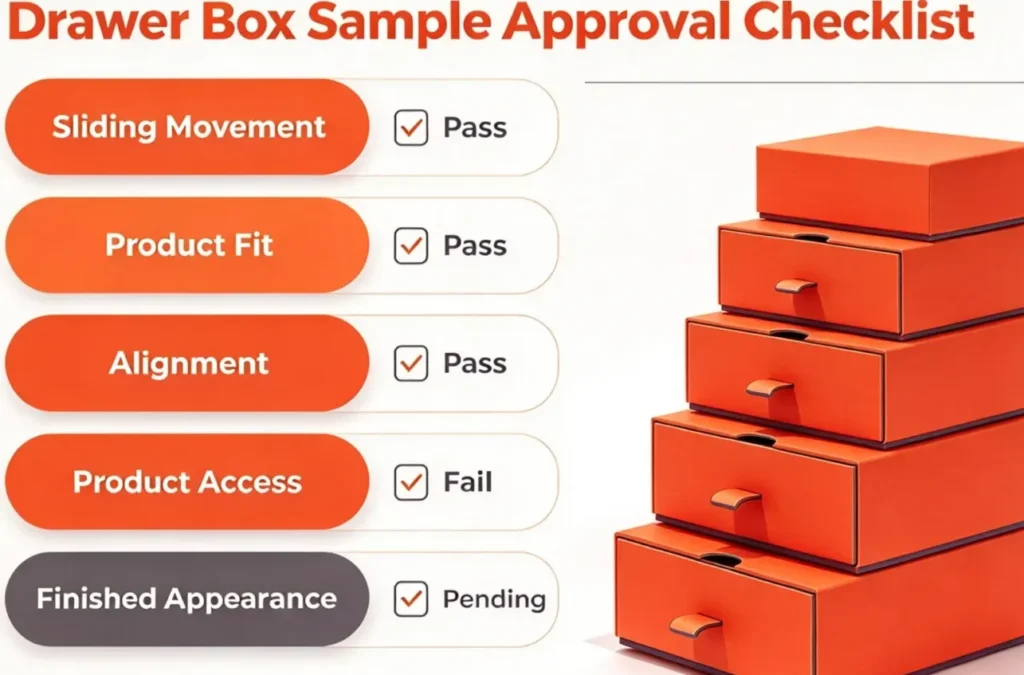
The final sample should be checked with the actual product configuration whenever possible.
How Should You Check the Drawer Movement?
Open and close the drawer repeatedly.
Look for:
- excessive resistance;
- uneven movement;
- edge interference;
- poor alignment; and
- difficulty returning the drawer to the closed position.
If the product or insert changes the movement, perform the check with the actual contents inside.
How Should You Check Product Access?
Place the product in its final position and remove it as the customer would.
Check whether it can be accessed comfortably without pulling against the insert, sleeve or drawer.
What Should You Check on the Finished Appearance?
Inspect the closed and open package for:
- sleeve and drawer alignment;
- exposed edges;
- print positioning;
- wrapping condition; and
- product presentation.
How We Support Drawer Box Projects
Dongguan Esion Packaging Co., Ltd. supports packaging projects from structural development and sampling through production and QC inspection.
Our production process covers paper cutting, printing, gluing, laminating, die cutting, handmade assembly, QC inspection and packing.
As of September 2026, our current standard project information is MOQ 1,000 pcs and production time of about 15 days, with final timing confirmed according to the actual project.
Esion Package has passed FSC certification. The applicable certification scope should be confirmed according to the specific packaging project.
For a drawer box enquiry, prepare:
- Product dimensions
- Product weight
- Required quantity
- Insert or internal positioning requirements
- Preferred opening structure
- Artwork, drawings or product photos, if available
You can learn more about Dongguan Esion Packaging Co., Ltd. or contact our packaging team when the project is ready for sampling.
FAQ
Is a drawer box rigid or paperboard?
A drawer box can use different paper-based constructions. Rigid versions generally use board with a wrapped paper surface, while lighter versions can use paperboard. The appropriate construction depends on the required strength, appearance and application.
Can a drawer box hold heavy products?
The suitability depends on the box construction, board specification, internal support and transportation conditions. For heavier products, the finished package should be tested with the actual product rather than approved from dimensions alone.
Does a drawer box need an outer shipping carton?
Not necessarily. The drawer box is the product packaging, while an outer carton can provide additional protection during bulk transportation and distribution.
Can a drawer box include an insert?
Yes. An insert can position the product, reduce movement and improve presentation. Its dimensions need to be included when developing the drawer’s usable internal space.
What information should I provide when requesting a drawer box sample?
Provide the product dimensions, product weight, expected quantity, insert requirements and preferred opening structure. Product drawings or photos are also useful during initial packaging development.