
Table of Contents
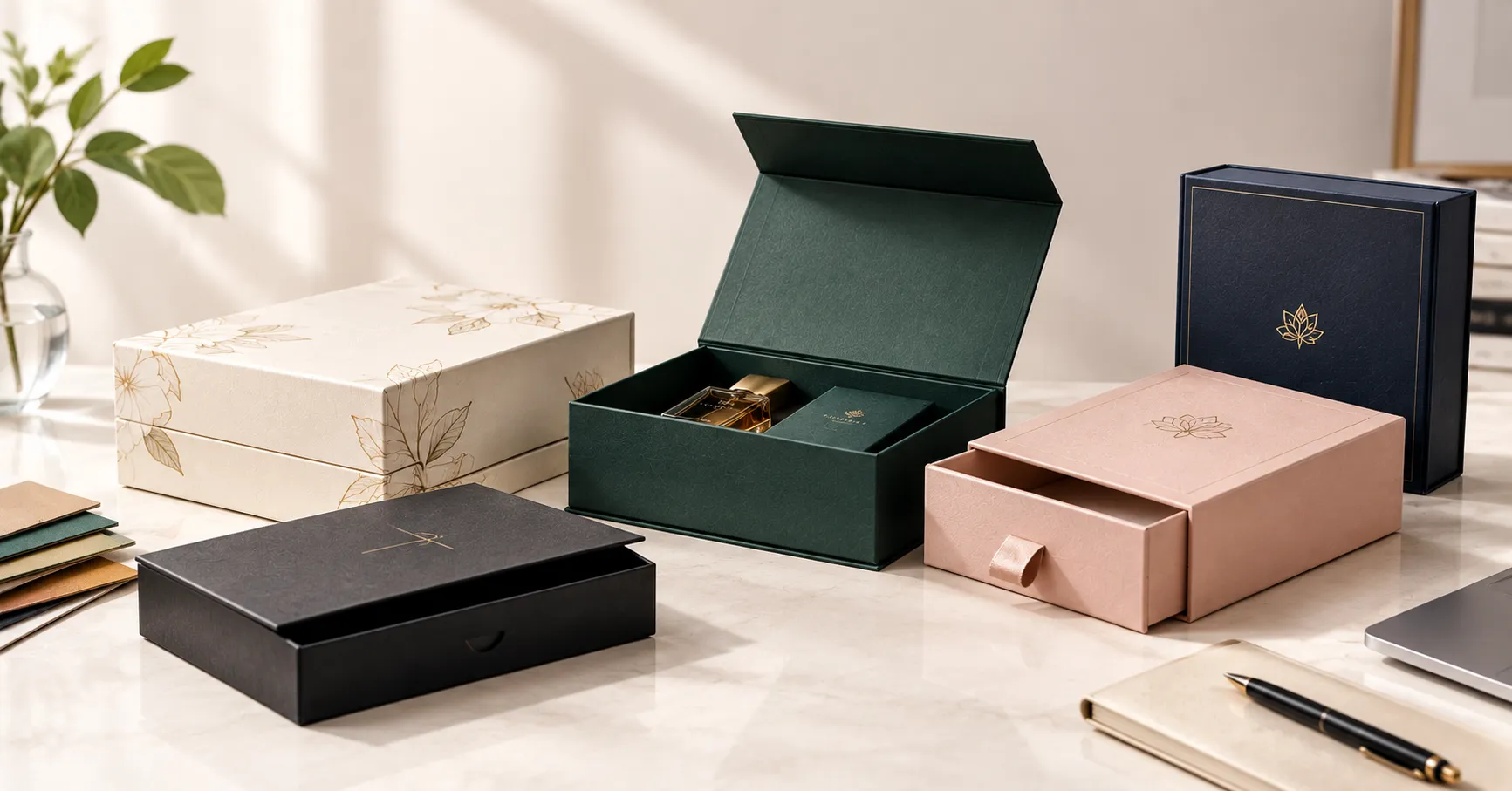
How to Choose a Custom Rigid Box Manufacturer: A Complete Guide
10. 9 月, 2026I’m an engineer at Esion Package, and I’ve worked in custom packaging production for 15 years. One thing I have learned is that choosing a rigid box manufacturer based only on price can create problems later—especially with structure, finishing, quality consistency, and delivery.This is especially important for magnetic gift boxes, where magnet position and closing strength directly affect product presentation.
A custom rigid box involves more than making a box to a certain size. The board, wrapping paper, structure, printing, finishing, insert, assembly, and quality control all need to work together.
If you are comparing manufacturers, this guide will help you evaluate them step by step. By the end, you will know what to check before requesting a quote, approving a sample, and starting mass production.
What Should You Look for in a Custom Rigid Box Manufacturer?
Start with manufacturing capability, not price.
A reliable rigid box manufacturer should be able to understand your requirements, develop the structure, produce samples, and maintain the approved specifications during mass production.
Check real manufacturing capability
Do not rely only on product photos on a website. Ask whether the company can provide actual production samples, factory information, and details about its manufacturing process.
You should also find out which processes are handled directly and which are outsourced. Outsourcing is not necessarily a problem, but the manufacturer should remain responsible for coordinating the project and controlling the final quality.
Check custom structure experience
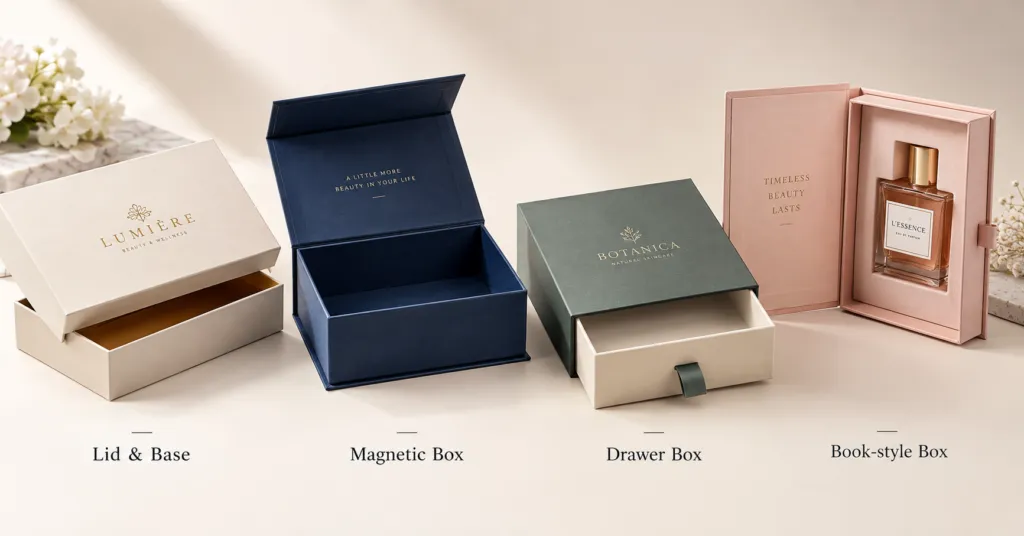
A custom rigid box may require a simple lid-and-base structure or a more complex magnetic, drawer, hinged, or book-style construction.
The manufacturer should be able to discuss your product dimensions and packaging requirements before production rather than simply asking you to choose from standard options. If you haven’t decided on a structure yet, see our Luxury Rigid Boxes guide for how to choose between them.
How Should You Verify a Manufacturer Before Ordering?
The best time to verify a rigid box manufacturer is before you approve the final quotation.
At this stage, you are checking whether the manufacturer has a controlled production process.
A typical project should follow a clear sequence:
Requirement Confirmation → Quotation → Structure & Artwork → Sampling → Sample Approval → Mass Production → QC → Packing → Shipment
Ask about the production process
A manufacturer should be able to explain how your box moves from artwork to finished packaging.
Important stages include printing, finishing, mounting, box forming, assembly, and final inspection.
Ask how quality is controlled
Instead of simply asking, “Do you have quality control?”, ask specific questions:
- How are dimensions checked?
- How is printing consistency controlled?
- How are finished boxes inspected?
- How are production defects handled?
Specific answers give you a much better understanding of the manufacturer’s actual process.
How Do Materials and Structure Affect the Final Box?
Material and structure should be confirmed together because they affect strength, appearance, cost, and the final user experience.
Choose the board according to the box
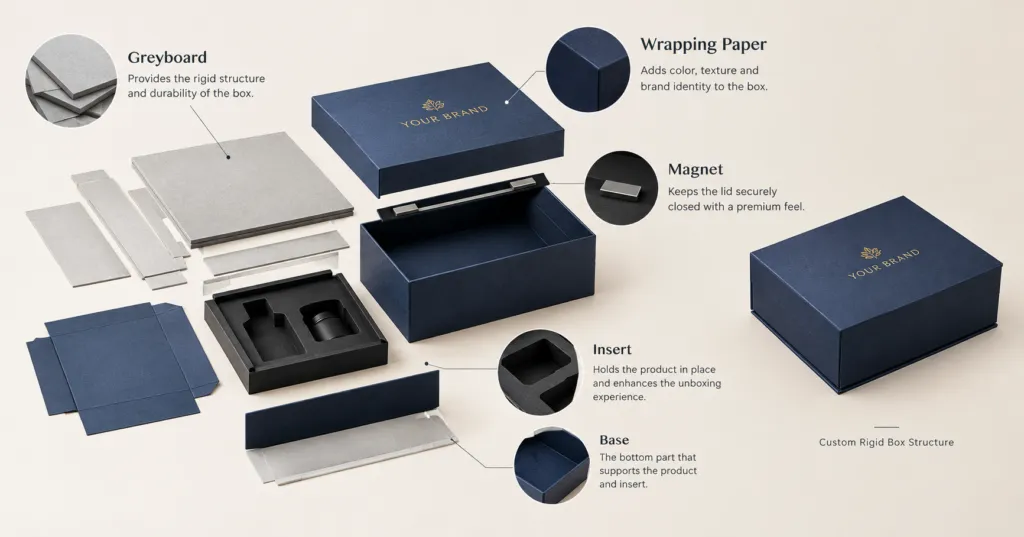
Rigid boxes commonly use thick paperboard such as greyboard. The appropriate thickness depends on the box size, product weight, structure, and required appearance.
A thicker board is not automatically the better choice. The goal is to use a specification that provides enough strength without adding unnecessary weight or cost.
Consider the wrapping paper and finish
The outer paper determines much of the box’s visible appearance and tactile feel.
Depending on the design, you may consider art paper, textured paper, specialty paper, or other wrapping materials. The paper should also be compatible with the selected printing and finishing processes.
Confirm the structure before production
Product dimensions should be confirmed before the structure is finalized. If an insert is required, its fit and clearance should be tested with the actual product.
For magnetic or hinged boxes, also check the magnet position, closing strength, lid alignment, and hinge construction during sampling.The magnet type and strength should match the product weight—lighter items can use standard magnets, while heavier products may require stronger neodymium magnets to keep the lid securely closed. The right magnetic strength should also provide a secure closure without making the box difficult to open.
Which Printing and Finishing Options Should You Consider?
Printing creates the visual identity, while finishing adds texture and visual detail. Both should be decided before the sample is approved.
Common printing options include offset printing, digital printing, CMYK, and Pantone color matching.
You can also explore our magnetic rigid box solutions to see how different structures, inserts, and finishes are applied to finished packaging.
Depending on the design, finishing may include matte or gloss lamination, soft-touch, foil stamping, embossing, debossing, or spot UV.
The key is not to add as many processes as possible. Each finishing process should have a clear purpose and work with the chosen wrapping paper.
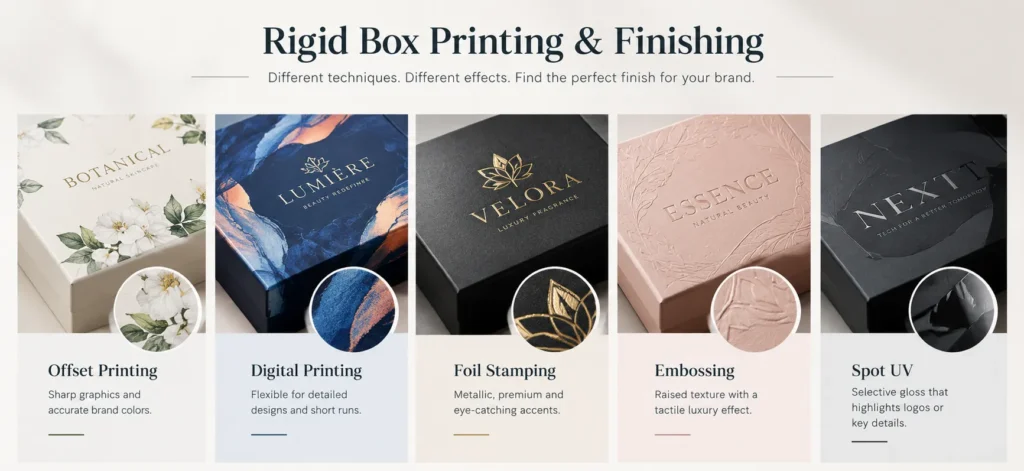
For branded packaging, approve the color and finishing through the sample before mass production. This gives the production team a clear physical reference.
How Should You Check the Sample Before Mass Production?
The sample approval stage is the most important quality checkpoint before a large order begins.
When you receive the sample, check more than its appearance.
Check the physical details
Pay attention to:
- Overall dimensions
- Corners and edges
- Paper wrapping
- Printing alignment
- Surface finish
- Lid alignment
- Magnetic closure
- Insert fit
Open and close the box several times if it has a magnetic or hinged structure.
Make the approved sample the production reference
Once the sample is approved, the final specifications should be recorded clearly.
This should include the dimensions, board, wrapping paper, printing, finishing, insert, and closure.
The purpose is simple: the production team should know exactly what the approved product looks and feels like.
What Should You Confirm in the Quote and Production Schedule?
A good quotation should be based on a complete specification, and the production schedule should be confirmed before placing the order.
For an accurate quote, provide:
- Box dimensions
- Structure
- Board thickness
- Wrapping paper
- Printing
- Finishing
- Insert
- Quantity
- Shipping destination
(See our Luxury Rigid Boxes guide for a full checklist of what to prepare before requesting a quote.)
Two manufacturers may give very different prices because their materials, production methods, finishing, packaging, or included services are different.
So compare quotations based on the same specification, rather than choosing the lowest number immediately.
Follow the actual production timeline
A custom rigid box project normally moves through several stages:
Specification → Quote → Sample → Approval → Production → QC → Shipment
Lead time can be affected by material preparation, printing, finishing, assembly, order quantity, and approval speed.
Confirm both the sample lead time and mass-production lead time before placing the order, especially if the boxes are needed for a product launch.
How Can You Choose the Right Rigid Box Manufacturer?
The right manufacturer is the one that can consistently deliver the required structure, quality, appearance, quantity, and schedule—not simply the lowest price.
Before making your final decision, check four things:
Can they make the structure?
Can they produce a reliable sample?
Can they maintain the approved quality in mass production?
Can they communicate clearly about cost and delivery?
For brands that already have product dimensions, artwork, or a packaging concept, Esion Package can help turn those requirements into a production-ready rigid box specification. This includes structure confirmation, material selection, sampling, production coordination, and quality control.
The goal is to make the specifications clear before production starts, reducing unnecessary revisions and communication problems later.
If you are ready to request a quotation, prepare your box dimensions, structure, materials, finishing requirements, quantity, and delivery destination first. This will help the manufacturer provide a more accurate proposal.
FAQ
What is a custom rigid box manufacturer?
A custom rigid box manufacturer produces rigid boxes according to specific requirements such as dimensions, structure, materials, printing, finishing, and inserts.
How do I choose the right rigid box manufacturer?
Check its manufacturing capability, sample quality, customization experience, quality control, lead time, communication, and total cost instead of comparing unit price alone.
What information does a rigid box manufacturer need for a quote?
You should provide the box size, structure, board, wrapping paper, printing, finishing, insert requirements, quantity, and delivery destination.
What is the MOQ for custom rigid boxes?
For most custom rigid box projects, our standard MOQ starts at 1,000 pieces, though this can vary depending on materials, structure, and finishing. See our Luxury Rigid Boxes guide for more on how specifications affect quantity requirements.
How long does it take to manufacture custom rigid boxes?
Mass production typically takes around 15 working days after the sample is approved, though sampling and material preparation should be added on top. See our Luxury Rigid Boxes guide for typical sample and production timelines.